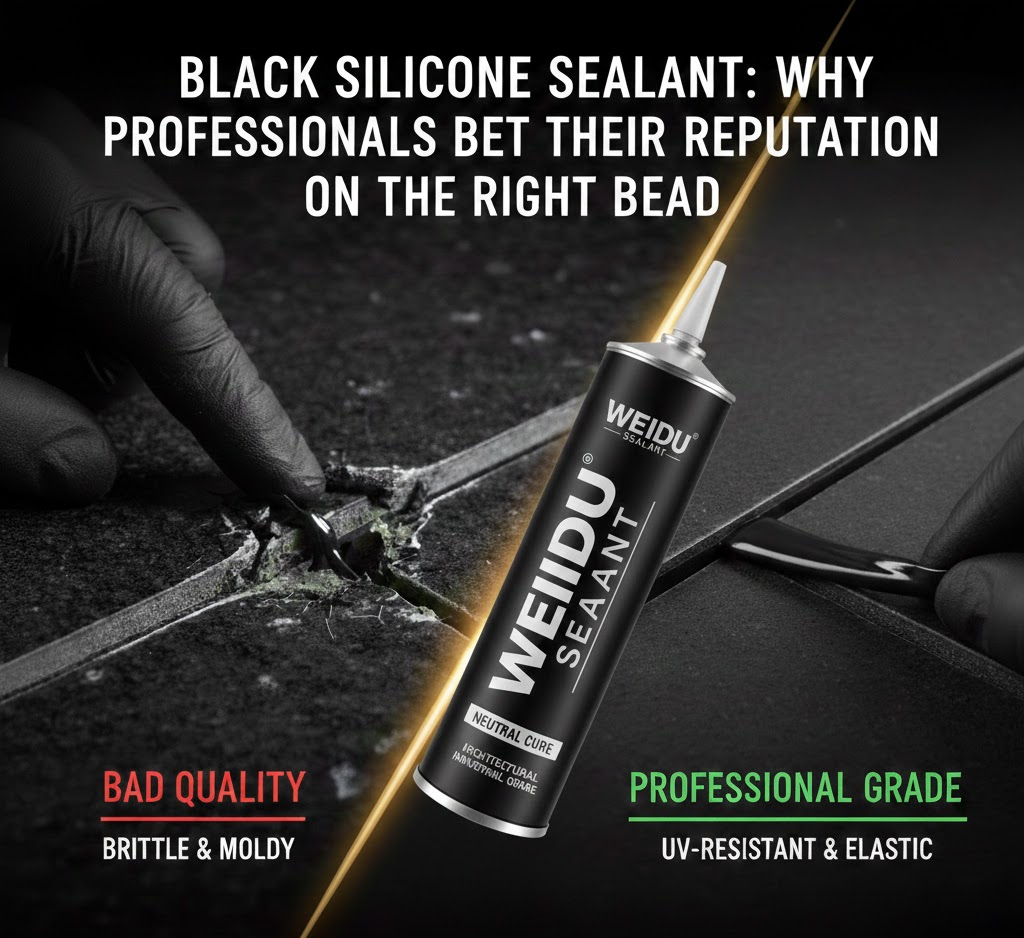
Black Silicone Sealant: Why Professionals Bet Their Reputation on the Right Bead
Twenty years in this game teaches you one thing. Details kill. Or they save.
Black silicone sealant is one of those details. It’s not just “caulk.” If you call it caulk in front of a master glazier, he’ll laugh you off the job site. This is high-performance chemistry. It’s the difference between a high-end kitchen that looks sharp for a decade and a leaking mess that smells like mildew by Christmas.
I’ve seen $50,000 installations ruined by a $5 tube of garbage. Don’t be that guy.
The Chemistry of a Clean Line
Black silicone isn’t just white silicone with a tint. The carbon black used to pigment the material actually changes its properties. It provides inherent UV resistance that clear or white formulations struggle to match.
When you’re specifying black silicone sealant, you aren’t just looking for a color match. You’re looking for structural integrity. You’re looking for a material that won’t shrink, won’t crack, and won’t turn into a brittle mess when the sun hits it.
Neutral Cure vs. Acetoxy: The Choice That Matters
Stop buying whatever is on the shelf at the big-box store. You need to know what’s in the tube.
- Acetoxy Cure: This is the stuff that smells like vinegar. It’s fast. It’s cheap. It’s also acidic. If you put this on natural stone, copper, or certain plastics, you’ll etch the surface or cause delamination. It’s great for glass-on-glass. For everything else? Move on.
- Neutral Cure (RTV): This is the gold standard. It releases alcohol or another non-acidic byproduct while curing. It adheres to almost everything. It stays flexible. It doesn’t corrode your hardware.
If you’re working on a high-end bathroom or an industrial engine component, use neutral cure. No exceptions.
Where Black Works (And Where It Fails)
Black silicone is a design tool. It creates “shadow lines.” It hides the inevitable buildup of dust and grime that makes white sealant look yellow and sickly after six months of use.
The Best Use Cases:
- Black Quartz and Granite: It creates a seamless transition that disappears.
- Industrial Kitchens: It hides oil splashes and high-traffic wear.
- Automotive Gaskets: High-temp black silicone handles engine heat and vibrations that would shred household grades.
- Architectural Glazing: It provides that “limitless” look for modern window frames.
But here is the catch. Black silicone is unforgiving. If your bead is shaky, the contrast against a lighter tile will scream your incompetence to every person who walks into the room. You can’t hide a bad joint with black. You have to be perfect.
The Veteran’s Rules for Application
I’ve pulled miles of old, failing sealant out of joints. Most of those failures weren’t the product’s fault. They were the installer’s fault.
- Prep or Die. If there is a molecule of old silicone or oil on that substrate, the new bead will fail. Use 90% isopropyl alcohol. Scrub it. Then scrub it again.
- Dry Means Dry. Silicone hates moisture during the bonding phase. Even a little humidity can compromise the “bite” the sealant takes on the surface.
- Tape is for Amateurs (Unless It’s Not). On high-contrast jobs—like black silicone against white marble—tape the edges. Pull the tape while the sealant is still wet. This is how you get that factory-edge look.
- The “Finger” Myth. Don’t spit on your finger and drag it across the bead. Your saliva contains bacteria and enzymes that can break down the anti-fungal properties of the sealant. Use a professional profiling tool and a dedicated smoothing liquid.
Why Quality Costs More
You’ll see tubes of black silicone sealant for three dollars. You’ll see others for fifteen.
The cheap stuff is loaded with “extenders” or oils. These oils eventually leach out of the silicone. When they do, the sealant shrinks. It pulls away from the edges. Suddenly, you have a hairline crack that lets water behind the wall.
Professional-grade black silicone has a high solids content. What goes into the joint stays in the joint. It remains “rubbery” for twenty years. It handles the expansion and contraction of a building as the seasons change.
The Bottom Line
Don’t treat sealant as an afterthought. It is the primary barrier between your structure and the elements.
When you choose a high-quality black silicone sealant, you are buying insurance. You are ensuring that you won’t get a callback in two years because a sink started leaking or a backsplash started peeling.
Pick the right chemistry. Prep the surface like your paycheck depends on it. Lay a clean bead. That’s how you build a reputation that lasts twenty years.