
Table of Contents
ToggleWhat is Cladding Sealant & How to Choose?
In recent years, incidents of exterior wall panels falling off have been common. Most exterior wall detachments are caused by rainwater seeping into the joints, leading to blistering and peeling of the wall surface, rather than the panels themselves. Everyone knows the importance of exterior wall panels for building protection; however, even for the most expensive exterior wall panel systems, when cracks appear in the joints between wall panels, it is extremely easy to trigger water seepage problems. Air and rainwater leakage into the building’s wall system due to Cladding Sealant defects is the most common failure. The material selection, construction, and maintenance methods of Cladding Sealant in every link affect the waterproof durability of the building’s exterior wall.
What is Cladding Sealant?
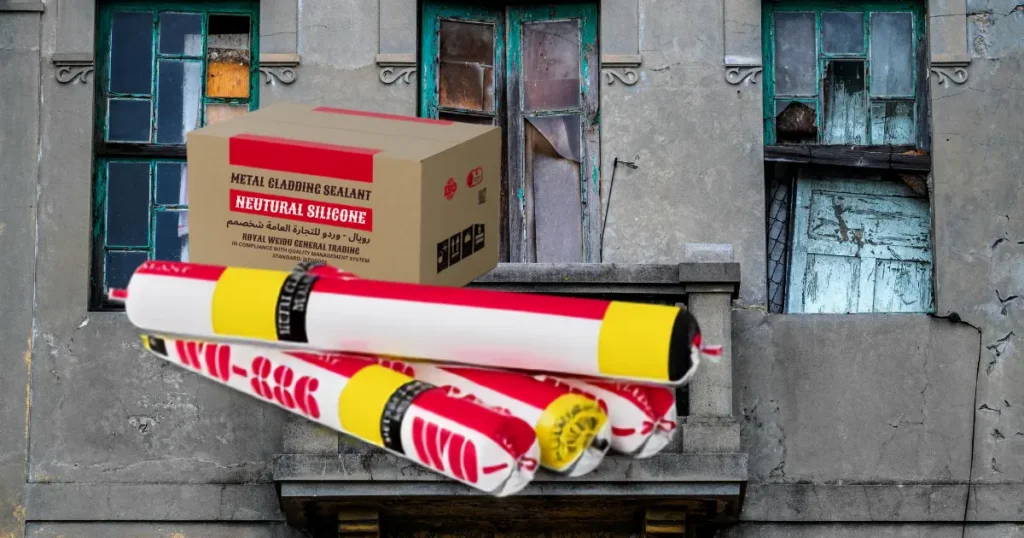
Cladding sealant is a joint sealing material used to fill the gaps between wall panels. Due to wind loads, temperature and humidity changes, and structural pressure, buildings will experience slight movements, and the exterior wall sealant will also expand and contract accordingly. For example, for aluminum composite panel exterior walls exposed outdoors under high summer temperatures, the panels will expand by a few millimeters due to heat. The flexibility of cladding sealant can safely withstand this kinetic energy; once rigid panels bend and deform, strong winds and heavy rain will quickly permeate rainwater into the exterior wall.
What Types of Cladding Sealant Are There?
Selecting the optimal cladding sealant and proper daily maintenance can allow the exterior wall to safely guard the entire building. Now let us explore the specific chemical classifications that achieve this long-term protection.
The chemical types of cladding sealant are primarily classified according to the base polymer structure, which determines the sealant’s flexibility, substrate adhesion, and weather resistance. For example, the cladding sealant performance required for high-rise building structural glass curtain walls is completely different from that of ordinary low-rise residential wooden exterior walls.
Silicone Cladding Sealant
Silicone cladding sealant‘s excellent anti-ultraviolet performance and weather resistance provide outstanding protection for exterior wall cladding.
Polyurethane Cladding Sealant
Polyurethane sealant, on the other hand, has better paintability and mechanical tear resistance.
How to distinguish the performance of the two sealants?
South-facing high-rise glass curtain walls exposed to intense solar radiation for a long time must use silicone sealant, because polyurethane will rapidly chalk, harden, and degrade under continuous ultraviolet irradiation. The joint movement capability of silicone structural sealant is as high as ±50%, making it the best choice for high-rise building curtain walls.
MS Cladding Sealant
MS sealant combines the durability and paintability of polyurethane with the outstanding weather resistance of silicone, making it an ideal choice for various cladding panels. It is suitable for multi-substrate expansion joints, but its adhesion strength is not as good as polyurethane sealant, and compared to silicone sealant, it performs weaker in terms of movement capability and weather resistance.
Substrate matching is an exact scientific process that matches the chemical properties of elastic sealants with the porosity, surface energy, and thermal expansion and contraction characteristics of the substrates. I have seen some clients use high-modulus, low-movement-capability building sealants on highly active metal expansion joints; they fell off a year after construction due to seasonal temperature changes, which is a great pity. Metal building facades need to choose highly flexible neutral-curing structural silicone sealants; do not choose acetoxy silicone, as the acidic gas released by acetoxy silicone will corrode metal surfaces.
Natural wooden siding will expand and contract according to environmental humidity, and polyurethane cladding sealant can stretch without tearing from the wood’s cellular structure. When dealing with exterior wooden siding, professional builders usually prefer to use polyurethane or MS polymer hybrid sealants, because these two types of sealants can be painted, allowing the decorative finish to match more perfectly.
How to Choose Cladding Sealant
Many people believe that silicone structural sealant can completely replace all waterproof sealing products; this is a wrong concept. Structural silicone can withstand glass loads, and waterproof silicone can prevent water and air leakage. The two need to be used differently, but some projects can use both systems simultaneously. Using structural silicone in areas with extremely high waterproofing requirements, where the movement capability or joint design is inconsistent with project requirements, may lead to waterproofing failure.
Choosing a cladding sealant requires considering substrate compatibility, joint movement capability, weather resistance, and adhesion.
- Movement capability is one of the most important parameters. In the UAE, exterior building walls exposed to sunlight all year round can have surface temperatures exceeding 70°C, and many substrates have large expansion and contraction rates; sealants with high movement capability are typically used.
- Silicone sealant has the highest anti-ultraviolet performance, making it suitable for exterior walls exposed to intense sunlight for long periods.
- Adhesion and expected usage conditions are comprehensively considered based on the characteristics of the substrate.
- The best method for choosing exterior wall sealants is to combine engineering project evaluation, manufacturer testing, and sealant technical documentation. Consulting an experienced sealant supplier is the fastest route to obtain project recommendations.
Cladding Sealant Construction Tips
Absolutely do not skip the crucial step of substrate grinding; this will cause tiny air pockets to remain on the concrete substrate, which will eventually absorb external moisture and completely destroy the chemical bonding. Let’s understand the perfect professional construction steps:
- Substrate Preparation: Clear away dust, grease, standing water, and residues from the substrate surface; this is a necessary preparation before using any sealant. Professional construction workers will wipe the expansion joint surface with industrial solvents to ensure the adhesion effect is not affected by minute dust layers.
- Backer Rod: Closed-cell backer rod is a plastic foam material used to fill into deeper gaps; it can adjust the thickness of the sealant and prevent internal rigid bonding. When the sealant bonds to both sides of the joint surface and simultaneously bonds to the bottom of the joint, three-sided adhesion occurs, which restricts the stretching capability of the sealant, leading to tearing during thermal expansion. Regardless of the reason, do not skip this step.
How to Maintain
Daily maintenance can protect the life safety and respiratory health of every homeowner. When rainwater permeates the exterior wall and enters inside the wall, black mold rapidly breeds within damp, unventilated wall interiors; this is extremely detrimental to the air inside the house and very difficult to remove.
Regular inspections and repairs of building exterior walls, and establishing mandatory building management procedures, can ensure safety during the service life. For example, after high summer temperatures, inspecting south-facing structural glass joints can ensure you discover critical tiny cracks in time before the autumn rainstorms arrive, which can reduce maintenance costs by at least 60%.
Conclusion
Cladding sealant is the most critical line of defense protecting a building’s external and internal structures. Selecting chemically compatible cladding sealant based on substrate characteristics and consulting a professional sealant supplier before project construction can quickly obtain construction advice for the project. Actively using backer rods during construction can prevent adhesion failure caused by three-sided sealant adhesion. Strictly scheduling a biannual exterior wall structural inspection will ensure the building facade remains completely waterproof and highly durable for decades to come.
