
Discover the best waterproof sealants for commercial projects. Compare silicone, PU, and MS sealants to prevent moisture damage and costly project failures.
Table of Contents
ToggleThe Best Waterproof Sealant
The U.S. Department of Energy states:
“Air movement accounts for more than 98% of all water vapor movement in building cavities. Air naturally moves from high-pressure areas to lower pressure areas by the easiest path available—generally through any available hole or crack in the building envelope. Moisture transfer by air currents happens quickly, and carefully and permanently air sealing any unintended paths for air movement in and out of the house is a very effective way to control moisture.”
Waterproof sealants effectively prevent damage caused by moisture. This guide provides homeowners and contractors with advice on selecting the best waterproof sealants and explains how they perform in various applications.
What is a waterproof sealant?
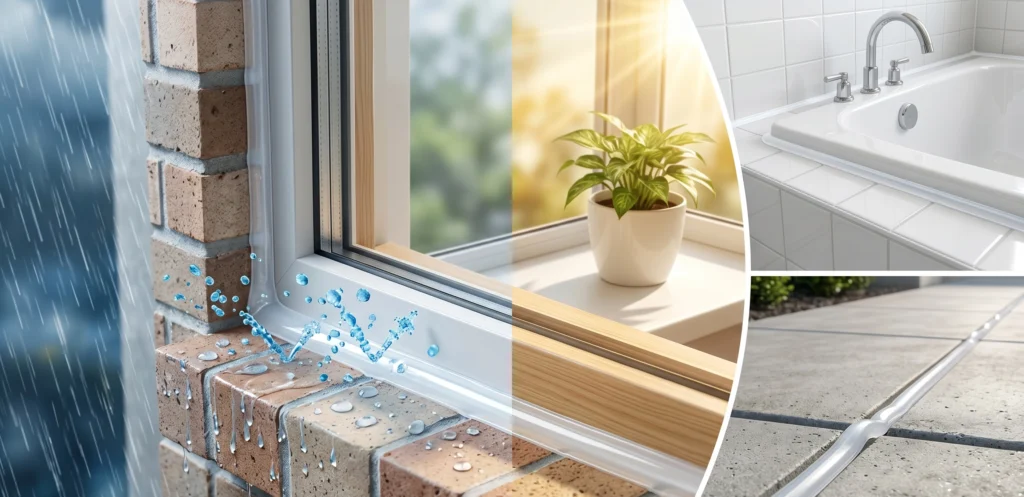
A waterproof sealant is a material used to fill joints; it creates an elastic, waterproof barrier within the gaps of substrates to block moisture infiltration, specifically targeting areas prone to leaks. For instance, window frame joints shift with changing weather conditions; the flexibility of waterproof sealants allows them to accommodate this movement and prevent rainwater from seeping in, even during extreme weather. For home maintenance, waterproof sealants represent a low-cost investment that protects the home from water damage. The best waterproof sealant isn’t necessarily the one with the strongest adhesion, but rather the one that is perfectly suited to the specific application.
Why are waterproof sealants important?
“It is extremely important to prevent uncontrolled moisture from entering the building envelope through window and door openings, seams, footings, roofs or other openings.”
— U.S. EPA
Waterproof sealants are crucial. Moisture infiltration can lead to mold growth and wall deterioration, directly causing building aging and structural damage. By blocking water from areas where it shouldn’t penetrate, waterproof sealants reduce the risk of mold and improve the building’s energy efficiency. In short, a waterproof sealant is more than just a sealing material; it serves as a vital protective element for the building.
The Best Waterproof Sealant
Many people assume that a single type of waterproof sealant can solve every waterproofing problem—but that is not the case! The best sealant depends on the environment and the substrate. Since different sealants offer distinct performance advantages, choosing the right one can boost your waterproofing system’s protective capability by as much as 50%.
Silicone Waterproof Sealant
In the realm of waterproofing, silicone sealants stand out for their exceptional flexibility and durability. They withstand extreme temperatures and intense UV radiation, maintaining a stable bond even in consistently damp environments. High-quality waterproof silicone sealants often contain anti-mold agents and offer a lifespan of 10 to 20 years, making them the ideal choice for bathrooms, shower enclosures, kitchens, doors, windows, and architectural curtain walls.
When selecting a silicone sealant, professionals often stretch a cured bead of the material by hand; this provides a quick, intuitive way to gauge its flexibility. Is it better if the cured silicone bead stretches further? Not necessarily. You should observe whether the bead snaps back quickly after being stretched to its limit and recovers to at least 85% of its original length. High-quality silicone will not show cracks or whitening on the surface after stretching. If it breaks quickly, it indicates insufficient tensile strength and ultimate elongation, resulting in poor elasticity. I generally focus on three key performance indicators: ultimate tensile strength, ultimate elongation, and movement capability. These directly reflect the sealant’s flexibility, strength, and durability. Of course, higher values aren’t always better; these properties require a balance. Modern manufacturing technology for waterproof silicone sealants is highly advanced, making them easy and convenient to use—which is why so many DIY enthusiasts choose them for home projects.
Polyurethane Waterproof Sealant
Polyurethane is a durable, waterproof sealant with exceptionally strong adhesion, particularly on porous substrates like concrete and masonry; another advantage is that it is paintable. Customers often ask which offers better waterproofing: silicone sealant or polyurethane sealant? This formula makes the difference clear:
- Silicone Sealant: Superior Waterproofing + UV Resistance + Flexibility
- Polyurethane: High-Strength Adhesion + Paintability + High Structural Integrity
As this formula shows, these two sealants possess distinct capabilities. Silicone sealant is the best choice for areas constantly exposed to rain, sunlight, or damp conditions. However, for sealing concrete expansion joints or exterior wall seams, polyurethane sealant is clearly the wiser choice. You should select the appropriate sealant based on factors such as the application environment and the materials being bonded.
MS Waterproof Sealant
MS sealant combines the strengths of both silicone and polyurethane. It offers the waterproofing performance of silicone alongside the adhesion and paintability of polyurethane, making it an excellent choice for bathrooms and kitchens. However, MS sealant’s weather and UV resistance are inferior to silicone’s; when used outdoors, it is prone to chalking. Once the sealant bead chalks, it loses its elasticity, and its waterproofing function fails.
| Sealant Type | Best Environment / Substrate | Key Advantages | Main Limitations |
|---|---|---|---|
| Silicone Sealant | Bathrooms, kitchens, windows, curtain walls | UV resistance, exceptional flexibility, long lifespan | Cannot be painted over |
| Polyurethane Sealant | Concrete expansion joints, masonry, exteriors | High-strength adhesion, paintable, durable | Lower UV resistance compared to silicone |
| MS Sealant | Indoor bathrooms and kitchens | Combines silicone waterproofing & PU paintability | Prone to chalking outdoors (poor UV resistance) |
3 Tips to Prevent Sealant Waterproofing Failure
Cracking, yellowing, mold growth, shrinkage, or even detachment leading to leaks are all signs that the sealant’s waterproofing function has failed. If a leak occurs in a sealed area, don’t jump to conclusions—the issue isn’t always the sealant’s quality. Here are three tips to help prevent sealant failure.
1. How to Choose a Waterproof Sealant
As previously mentioned, different types of sealants offer unique advantages; standard sealants cannot replace weather-resistant sealants, and acrylic sealants cannot substitute for dedicated waterproof sealants. Silicone weather-resistant sealant is the best choice for high-temperature outdoor environments with strong UV exposure. Professional silicone structural sealant should be used for areas like windows, doors, and curtain walls, while silicone and MS sealants are the best waterproof options for kitchens and bathrooms frequently exposed to water. For applications involving prolonged submersion in water—such as swimming pools and bathtubs—it is essential to select a sealant specifically designed for underwater use.
Most people overlook the manufacturing date when purchasing sealant; however, expired sealant suffers from significantly reduced performance, including diminished waterproofing capabilities and weaker adhesion. Therefore, always check the expiration and manufacturing dates on the packaging before buying any type of sealant. Poor-quality formulations typically fail within one to two years. My recommendation is to choose products from reputable manufacturers that have obtained authoritative certifications—such as DCLD, Guardian Glass, or ICGG.
2. How to Apply Waterproof Sealant
Applying the sealant too thinly or too thickly during installation can compromise its waterproofing performance. Some installers rush the process, moving on to the next stage before the sealant has fully cured, which makes it prone to detachment. Professional teams, by contrast, thoroughly clean the substrate surface and apply a primer before installation. They carefully determine the appropriate sealant thickness based on the substrate and the joint dimensions, ensuring the sealant has fully cured deep within the joint before proceeding with further work.
3. Daily Maintenance of Waterproof Sealant
Once the initial steps are executed correctly, there remains one final, crucial step: daily maintenance. Proper care can extend the service life of your waterproof sealant by 50% or even 100%. Almost all sealants are sensitive to harsh acidic or alkaline chemicals, which can damage the surface structure and accelerate aging. Prolonged exposure to oil, dust, or standing water can also cause the waterproofing function to fail prematurely. Rinsing the sealant with mild, neutral cleaners, ensuring adequate ventilation by opening windows, and controlling humidity levels can effectively prevent mold growth and prolong the sealant’s lifespan.
Conclusion
In its article A Brief Guide to Mold, Moisture and Your Home, the U.S. Environmental Protection Agency (EPA) states: “You can prevent damage to buildings and building contents, save money and avoid potential health problems by controlling moisture and eliminating mold growth.” Waterproof sealant is a critical component of any waterproofing system, effectively blocking moisture from entering building joints and thereby benefiting the entire structure; however, the best choice depends on your specific needs. This article explores the waterproofing advantages of various sealants and discusses solutions for different scenarios, helping homeowners and contractors select reliable products.