
You will find the main reasons of the best silicone bath sealant, including mold resistance and complete waterproofing.
Table of Contents
ToggleWhat is the best silicone bath sealant?
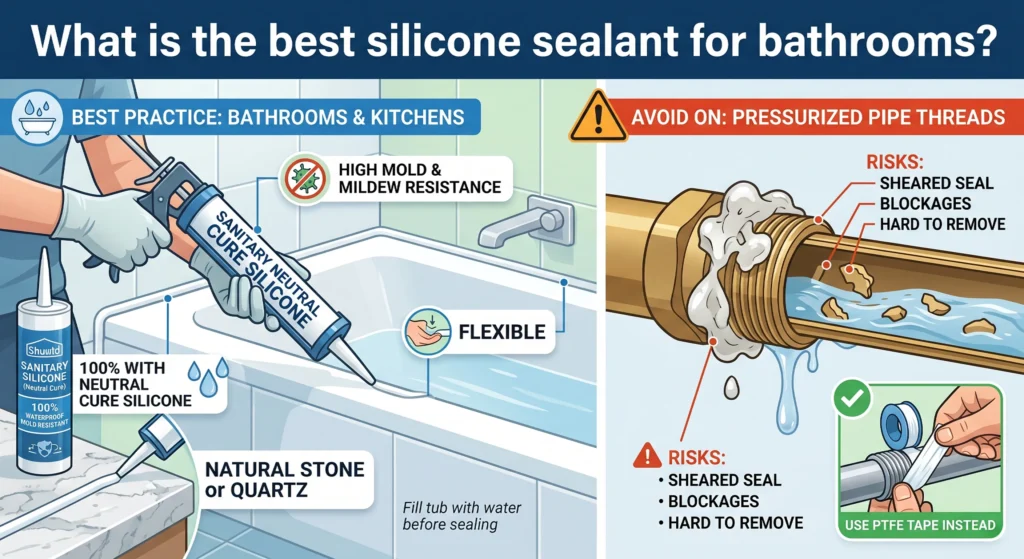
Whenever you are looking for a silicone sealant, I recommend choosing one formulated specifically for kitchens and bathrooms. You should always avoid sealants containing acrylic or latex-silicone blends, as they tend to shrink, crack, and deteriorate more quickly over time due to water exposure.
The best sealants will possess the following characteristics:
- High resistance to mold and mildew: They contain fungicides to prevent the growth of black mold—which typically thrives in warm, humid environments. When purchasing this type of sealant, ask for “Sanitary Silicone.”
- Waterproof: Naturally, this sealant must be 100% waterproof; rest assured, most high-quality options offer excellent water resistance.
- Flexibility: Once applied and fully cured, it takes on a rubber-like texture, allowing it to expand and contract in response to significant temperature fluctuations and structural movement within the building.
What type of silicone should you use for your bathtub?
When choosing the right silicone for your bathtub or project, the ideal choice—as mentioned earlier—is sanitary silicone. However, I recommend paying close attention to the curing method, as this depends on the specific material of your bathtub:
- Acetic-cure silicone: This is the most widely used type, though it comes with one minor caveat: it emits a strong vinegar-like odor while drying. It cures very quickly and offers excellent adhesion, making it perfectly suitable for enameled cast iron bathtubs, glass, and ceramic tiles—the most common bathtub materials.
- Neutral-Cure Silicone: This type has a faint odor—sometimes it is completely odorless—and, importantly, it is non-corrosive. In my opinion, you should use this type of silicone if your bathtub is made of acrylic or fiberglass, or if you are working with natural stone tiles. I emphasize these specific materials because, for instance, acetic-cure silicone can discolor them over time, whereas neutral-cure silicone is safe and creates a flexible, watertight seal.
An Important Tip: Before applying the silicone sealant, fill your bathtub with water. The weight of the water pulls the tub down to its lowest resting point; therefore, you should allow the silicone to fully cure while the tub remains filled. This prevents issues the first time someone takes a shower, ensuring the seal does not break.
Does silicone adhere to quartz?
Yes, but I recommend using a 100% neutral-cure silicone. As I mentioned regarding other materials, acetic-cure silicones can cause staining or discoloration over the long term. For this reason, neutral-cure silicone guarantees superior flexibility and adhesion without damaging the surface finish.
An Interesting Fact: Why silicone isn’t used in certain plumbing applications
It is true that silicone is widely used for plumbing fixtures—for example: Sealing the base of a toilet or sink, or sealing a shower drain flange. However, it should never be used on the joints or threads of pressurized pipes.
Here are the reasons why:
- It should not be used as a thread sealant because: silicone is designed to fill gaps and coat surfaces. When you tighten a threaded connection, the silicone is inevitably sheared and squeezed out, meaning it will fail to create a watertight seal. Instead of silicone, plumbers typically use PTFE tape (commonly known as Teflon tape) or a pipe joint compound (sealing paste).
- The Cause of Blockages: What do I mean by this? When the water is turned on, pieces of the material—as happens most of the time—can break off; these fragments then travel through the pipes, eventually causing a permanent blockage in the system.
- Why It Acts as an Adhesive: Maintenance often requires disassembling the plumbing fixtures. Silicone acts like a strong glue, making it extremely difficult to remove the component in the future and significantly increasing the risk of bending or breaking the sink pipe.
In Conclusion
The safest and most reliable long-term recommendation is neutral-cure silicone. If you happen to forget that specific term when making a purchase, I suggest asking for sanitary silicone; the salesperson or wholesaler will know exactly what to recommend without you needing to explain your specific situation. I hope you found this article helpful.