
Table of Contents
ToggleThe Best Bathroom Mold-Proof Sealant 2026
Recently, my city is experiencing the rainy season. A friend returned from a two-week business trip to find his leather sofa and solid wood table completely covered in white mold. It wasn’t just the furniture; even the people in the room were moldy! I’m not exaggerating.
On rainy days, the humidity reaches 90%, and the temperature is around 20℃—perfect weather for mold growth. The same applies to bathroom sealant. Microorganisms congregate here, and the warm, humid air provides ideal conditions for mold to thrive.
The Curse of Mold in Bathroom Sealant
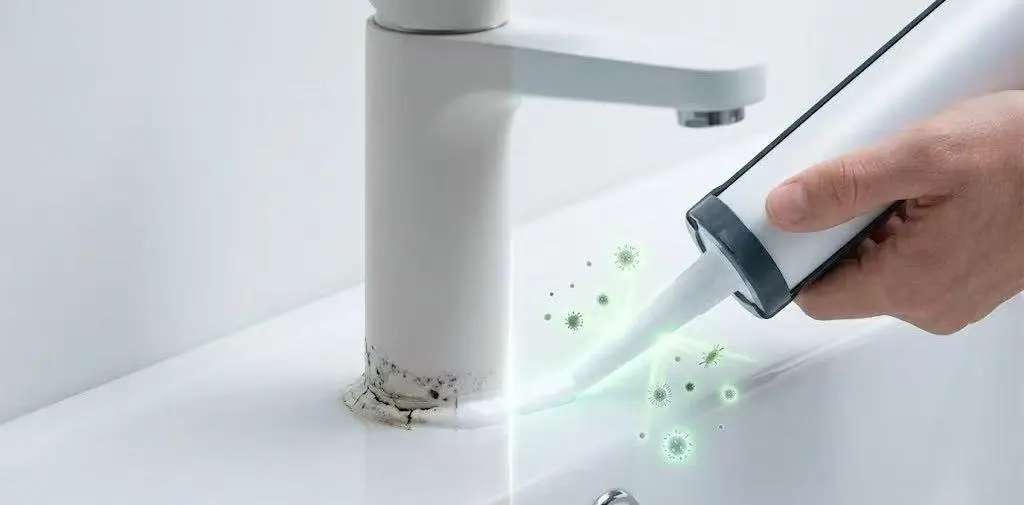
Most bathroom sealants fail to break the six-month mold curse, leading to a general acceptance of mold growth. Check your bathroom sink; see if the sealant is covered in dirty black or pink spots, and on rainy days, it might emit a damp, musty smell—these are signs of mold. Unsightly mold spots not only affect appearance but are also extremely detrimental to health. Inhaled mold can trigger allergies and respiratory illnesses.
What you might not know is that mold can also damage the internal structure of sealant, accelerating its aging process. For example, cracking and powdering can lead to water leakage. Do you still think mold is normal?
Why does sealant in bathroom areas easily mold? Bathrooms are not frequently ventilated and have significant temperature fluctuations. Surfaces like sink countertops and the bottom of the toilet are constantly exposed to water. If not dried promptly, mold easily grows. Combined with the hot steam from showers, the sealant strips undergo thermal expansion and contraction. Its microporous structure acts like a sponge, absorbing dead skin cells, soap scum, and other microorganisms.
Without any protective mechanisms, mold can grow rampant on the sealant surface, difficult to remove even with strong cleaning agents. Strong cleaning agents often contain irritating ingredients that can corrode the sealant strips, causing it to age faster. This is time-consuming and laborious, failing to effectively remove mold and instead making it easier for mold to accumulate.
In damp places like bathrooms, ventilation and cleaning alone are not enough. Bathroom sealants cannot be simple adhesives; they need to be waterproof and mildew-resistant. Hardware stores offer a wide variety of mildew-resistant sealants, leaving many people struggling to choose the right one. Sticky pastes, aside from different packaging, are difficult to distinguish in terms of mildew resistance based on texture alone, unless tested in a professional laboratory.
I can confidently tell you that materials and technology determine the duration of a sealant’s mildew resistance. Some sealants inhibit mold growth by adding mildew inhibitors, while others are mildew-resistant without them. There are significant differences in cost, price, and quality. Lower prices generally mean lower-cost materials in the formula, and inferior materials are a potential problem in any project. Trust me, don’t just focus on price; given enough time, you can always find the cheapest option on the market.
What type of anti-mold adhesive is suitable for the bathroom?
| Brand | Type | Price (USD) | Anti-mold Rating | Duration (Years) | Advantages | Suitable For |
|---|---|---|---|---|---|---|
| WACKER | Alcohol-based silicone anti-mold adhesive | $8 – $10 | Grade 0 | 5+ | Environmentally friendly, weather resistant | Kitchens, bathrooms, bathtubs, toilets, countertops |
| Sika | Acid-penetrating silicone anti-mold adhesive | $8 – $10 | Grade 0 | 5+ | Weather resistant, aging resistant | General use in damp areas: kitchens, bathrooms, balconies |
| BAIYUN | MS anti-mold adhesive | $6 – $8 | Grade 0 | 5+ | Environmentally friendly, cost-effective | Traditional interior decoration areas |
| Weidu | MS ceramic adhesive | $7 – $9 | Grade 0 | 5+ | Environmentally friendly, easy to clean | Toilets, washbasins, bathtubs, areas with minimal displacement |
Silicone anti-mold adhesives are suitable for most substrates, but silicone itself lacks anti-mold properties, requiring the addition of anti-mold agents to the formulation. Anti-mold agents are consumable materials that gradually leach out through the colloid. Once depleted, their anti-mold function disappears. High-quality anti-mold agents can extend the anti-mold effect.
WACKER and Sika silicone anti-mold sealants are leaders in the sealing industry. With proper home cleaning and ventilation, using WACKER alcohol-based anti-mold sealant or Sika acid-penetrating anti-mold sealant in conjunction can provide anti-mold protection for over 5 years. Price: 8-10 USD/tube. They meet the EN 15651-3 Class 0 anti-mold standard. Alcohol-based silicone is more environmentally friendly and has less odor, while acetate-based silicone cures quickly and has strong adhesion. Its flexibility and weather resistance make it suitable for use in any damp area of the bathroom, as well as other indoor and outdoor areas.
MS modified silane sealant achieves anti-mold effects without the need for additional anti-mold agents. This material is designed to reduce water absorption, resulting in a smooth, dry sealant surface that is less prone to attracting soap scum and dust. It can also be painted according to the décor design, an advantage that silicone sealants cannot offer.
BAIYUN MS anti-mold adhesive uses a long-lasting anti-mold formula, achieving the “Level 0 anti-mold” rating in GB/T 1741 standard. Priced at 6-8 USD per tube, its neutral MS curing component is gentle and environmentally friendly, making it safe for mothers and babies. However, due to the limitations of MS materials, its weather resistance is insufficient, and it cannot withstand strong ultraviolet radiation and extreme temperature differences. It is recommended for use in bathrooms and other indoor areas.
Weidu ceramic adhesive’s main material is MS resin. It achieves its anti-mold effect by increasing the adhesive’s hardness, overcoming the challenge of long-lasting anti-mold properties. The cured sealant has a smooth, bright white surface like glazed ceramic tiles, making cleaning as easy as washing tiles—it rinses clean with water. It is environmentally friendly and odorless, achieving the JC/T 885 standard’s Level 0 anti-mold rating. Priced at 7-9 USD per tube. For areas with small displacement, such as bathroom sinks and toilets, it can provide continuous anti-mold protection as long as the adhesive is not damaged. However, it cannot withstand scenarios with large displacement structures, a drawback due to the adhesive’s lack of toughness.
How to Prevent Mold in Your Bathroom
These are the secrets to breaking the mold curse and keeping your bathroom mold-free:
- Improve Ventilation: Mold thrives in warm, humid environments. Regular ventilation is crucial. While most bathrooms now have exhaust fans to remove steam after showering, the fastest and most effective way is to frequently open windows for ventilation, keeping the bathroom dry throughout the day.
- Maintain Cleanliness: Leaks caused by damaged sealants or other parts can lead to high humidity, creating ideal conditions for mold growth. Repairing leaks promptly will keep the bathroom clean and dry, providing an unfavorable environment for mold.
- Choose the Right Technology: Choose a high-quality anti-mold sealant to address the mold problem at its source. However, if the old sealant is already moldy, spend a day removing it and replacing it with a long-lasting anti-mold sealant.
If you want to truly save money, choosing the right technology is better than the cheapest option. A long-lasting anti-mold sealant can keep your bathroom clean, fresh, and mold-free for years to come!